

What ghee & coconut oil may be doing to your cholesterol? Publish Date : 02/11/2026

What ghee & coconut oil may be doing to your cholesterol?
Dr. Diyanshu Sengar and Mukesh Sharma
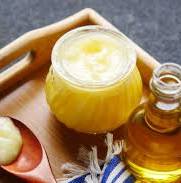
Every morning, in kitchens from Kochi to Kanpur, a pour and a sizzle have consequences for heart health, whether it's the aromatic ghee in dal tadka or coconut oil in breakfast chutney. But are these cooking mediums as virtuous as they are marketed to be? New research points to quite the opposite.
A recent Indian Council for Medical Research (ICMR) study presented at an American Heart Association conference found Indians who cook primarily with ghee have three times higher odds of elevated LDL (low-density lipoprotein) cholesterol — also called bad cholesterol as it lines artery walls with fatty deposits and sets the stage for heart attacks and strokes — than those who use groundnut oil. Coconut oil was barely safer, with users facing nearly three times the same risk.
"Each finding was statistically significant," says diabetologist Dr. Anjana Mohan from the Madras Diabetes Research Foundation (MDRF), who was part of the study that looked at health data from more than 18,000 adults across India. Sunflower and soybean oil, widely consumed across western and southern India, were found to raise LDL risk around twice as much as groundnut oil. Palm oil consumers faced a 1.7 times higher LDL risk.
It's no surprise, says Sudha Vasudevan, scientist and head, foods, nutrition and dietetics research at MDRF. "Ghee and coconut oil are dense in saturated fat, which drives LDL upward. Groundnut and mustard oils carry a more favourable profile of mono- and polyunsaturated fats, which the body handles better."
According to the study, every 2% rise in energy derived from saturated fat was linked to a 6% rise in high LDL risk. "In a country where ghee is drizzled over dal and coconut oil is the default medium for an entire region's cuisine, that link has population-scale consequences," stresses Vasudevan. "These are real kitchens, real meals, real habits that people have followed all their lives. The cumulative effect on India's heart health is enormous."
Researchers asked participants a structured set of questions, filtering out other factors to make sure the results reflected the oil's effect alone. A 14- point dietary profile also accounted for what else they ate — from refined cereals and animal foods to added sugar and salt. "The oil signal survived all of those adjustments, which makes the findings difficult to dismiss," points out Dr Mohan.
The study also measured high-density lipoprotein (HDL) or 'good' cholesterol. Metabolic outcomes, including newly diagnosed Type 2 diabetes, pre-diabetes, abdominal obesity and hypertension were tracked as well, offering a comprehensive picture of dyslipidemia risk across all major oil types used in Indian kitchens.
Mustard oil — a staple in northern and eastern kitchens, and occasionally maligned for its pungency and past regulatory battles — got some vindication for showing lower risks of reduced HDL than groundnut oil. India's public distribution system subsidises different cooking oils in different states. "We have sent a proposal to introduce groundnut oil in place of palm oil in ration shops. It will be expensive, but will massively cut spending on cardiac stenting and bypass surgeries,"
HOW COOKING OILS MEASURE UP
- Groundnut oil: Study's benchmark, with which all other oils were compared (mainly used in southern and western states)
- Mustard oil: 32% less risk of low HDL (common in north, east, northeast and central India)
- Sunflower oil: 1.5x higher risk of high LDL (mainly consumed in south India)
- Palm oil: 1.7x higher risk of high LDL (mainly consumed in south India)
- Soybean oil: 1.8x higher risk of high LDL (consumed mainly in Maharashtra, Madhya Pradesh, Mizoram)
- Coconut oil: 2.9x higher risk of high LDL (mainly consumed in Kerala)
- Butter/ghee: 3.4x higher risk of high LDL (consumed across Indian states)
HOW MUCH OIL DO INDIANS CONSUME?
- Recommended: 27g fats and edible oils every day
- Actual: 29.5g consumed daily by urban Indians (around 11 kg a year)
- 16.2g consumed daily by rural Indians (around 6 kg a year)
“We have proposed introduction of groundnut oil in place of palm oil in ration shops. It will be expensive, but will massively cut spending on heart stents and bypass surgeries”.
Govt Multispecialty Hospital, Omandurar, cautions that any oil marketed as traditional or wood-pressed shouldn't be assumed as healthier. "With wood-pressed oil, we need to be careful not just about groundnut oil. We don't always know whether loose oil has been mixed with palm oil or adulterated with reheated oil. A practical option is to use a glycaemic- and lipid-friendly combination of 70% rice bran oil and 30% safflower oil," she says.
While each oil has a health profile, the urban Indian, across food habits, consumes on average more fats and edible oils than the recommended daily per capita level of 27g. Lowering this will bring about an improvement in cardiac health.
Nutritionists recommend keeping oil quantities from a teaspoon to a tablespoon per serving. Steaming, boiling, and stir-frying at moderate heat preserve both nutrients and oil quality better than deep-frying, they say. "You don't have to give up your dal tadka or Kerala fish curry. But being intentional about which oil you reach for, and how much you use, is one of the most affordable health decisions a family can make," adds Vasudevan.
FSSAI's recent proposal to have a 'red hexagon' warning for packaged food high on salt, sugar and saturated fat has drawn criticism from health experts and food companies alike. Do you think it will help?
Yes, in principle, it can help people make a quicker, better-informed choice. One should not need a calculator and a magnifying glass to discover that a biscuit marketed as 'wholesome' is high in sugar or saturated fat. That said, it also creates an incentive to make sure a product just about conforms, thus a product that is genuinely low on saturated fat could now add enough to be just under the limit. And we should apply the same nutritional reasoning to familiar foods. A traditional sweet or namkeen does not become nutritionally superior because it uses jaggery or comes from a local shop. The useful question is how much sugar, salt and saturated fat you are eating — not whether the food looks modern or traditional.
How trustworthy are sugar-free, fat-free and preservative-free tags on products?
Food marketing should be treated as advertising, not as a health certificate. The healthiest things do not need to be marketed. Sugar-free does not mean low-calorie; the calories may come from fat or fillers such as maltodextrin. Fat-free may mean more sugar, salt or emulsifiers added to make the product palatable. Preservative-free does not necessarily mean safer. 'No added sugar' may still mean dates, honey, jaggery or fruit concentrate — all sources of sugar. Gluten-free is useful for those with Celiac disease or gluten sensitivity, but does not make a product healthy. Marketed healthfulness can have zero correlation with actual healthfulness. Read the ingredient list and nutrition panel: look at added sugar, carbs, protein, fibre, total fat and saturated fat.
In one of your reels, you have said that GLP-1 drugs make junk food taste bad. What's the science behind that?
GLP-1 drugs trigger satiety signalling earlier, so people eat less and think about food less. The same hormonal system also interacts with reward pathways involved in cravings, although findings about wider changes in preference are still early. The food industry has spent years learning how to weaken satiety: remove fibre, raise sugar, salt, fat and glutamate to create ultra-palatable foods. Some people taking GLP-1 drugs report that intensely flavoured snacks such as chips suddenly taste excessively salty or unpleasant, as though human biology has acquired a weapon in its long contest with food engineering. Companies are already exploring 'GLP-1-friendly' snacks. But these drugs are still evolving, so hype and industry-funded research must be scrutinised.
There's rampant over-information as well as misinformation driving food anxiety. How can you separate the wheat from chaff?
Learn to distinguish between content, knowledge and advice. Anything on social media — including my videos — is content. At best, it should provoke you to investigate further, not change your habits. Knowledge emerges through years of research, criticism, peer review and a body of evidence that usually comes with caveats. Advice is grounded in a clinician knowing your personal medical history. It does not happen through a generic social-media video. When someone says an ingredient is dangerous or causes cancer, ask: is it a hazard or a real-world risk at the dose people consume?
Was the study conducted in humans, mice or in a Petri dish? Is the claim based on one paper or years of evidence? A '40% increase' sounds terrifying, but if the risk rises from 0.001 to 0.004, the context changes completely. We should teach this kind of risk literacy in schools — especially when algorithms are designed to amplify frightening content.
Are foods described as natural, herbal or organic necessarily safer?
Arsenic, botulinum toxin, salmonella and cobra venom are all natural, and can be fatal, whereas vaccines and insulin are artificial and can save lives. Natural describes origin, not safety. Safety depends on the substance, the dose and the level of exposure; even too much water or salt can be dangerous. 'Herbal' does not mean chemical-free; plants have pharmacologically active chemicals. Organic does not automatically mean nutritious or safer either, it is a production and regulatory standard. Organic farming may avoid synthetic pesticides, but will still use permitted pesticides from natural sources.
What does the 'free-range' label mean?
When people hear the term 'free-range chicken', they may picture birds roaming freely outdoors. But in reality, it means the cage is just 2 feet larger. Allowing millions of chicken to roam freely is impractical on a large scale and would make the product much more expensive.
There's this line of thought that eggs are vegetarian. What do you think?
Whether eggs are vegetarian comes down to definition. If vegetarian means consuming nothing of animal origin, then the correct term is vegan — which excludes milk, honey, eggs as well as meat. A broader definition of vegetarianism, however, can permit animal-derived foods as long as producing them does not require killing an animal. By that logic, both milk and eggs qualify. Table eggs from commercial poultry farms are generally unfertilised. Unless a hen has mated with a rooster, the egg contains no embryo and cannot develop into a chick. The hen will lay such eggs regardless of whether humans eat them.

Writer: Dr. Divyanshu Sengar, the Medical officer, Pt. Pyare Lal Sharma, District Hospital Meerut.


