

The Truth of Farmer Suicides Publish Date : 13/11/2026

The Truth of Farmer Suicides
Professor R. S. Sengar
-
Decoding the farmer suicides beyond headline numbers
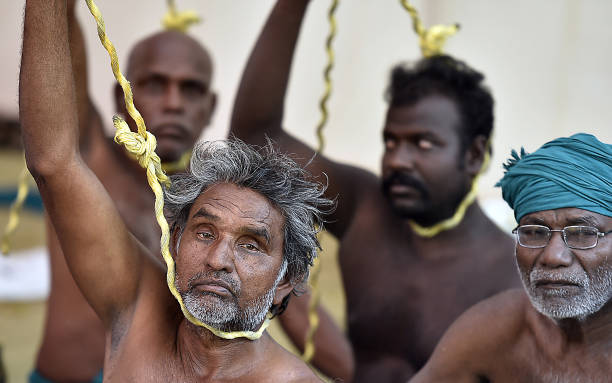
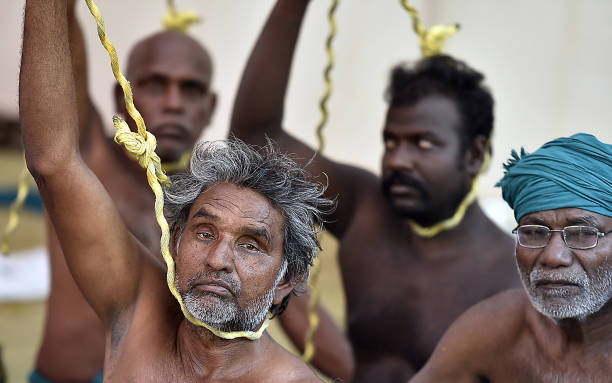
Between 2001 and 2022, more than 70,000 farmers killed themselves in Maharashtra. That works out to close to nine farmers per day, every day, for two decades. India as a whole accounts for roughly a third of all farmer suicides recorded globally. Maharashtra, for most of those years, accounts for a third of India's.
These are National Crime Records Bureau (NCRB) numbers. The data has gaps and definitional problems, and some researchers think it undercounts. But nobody thinks it overcounts. What the numbers show, even conservatively, is a sustained catastrophe in one of India's richest states.
One definitional point matters for reading every number that follows. Before 2014, NCRB reported a combined "cultivators and agricultural labourers" category that included all farmers. From 2014, it split the two. The figures here use the cultivators series, which means the pre-2014 and post-2014 counts are not strictly comparable, and part of the apparent decline after 2014 reflects the narrower definition. Maharashtra's farmer deaths. The verified Maharashtra cultivators series sums to 71,814 over 2001-2022, which is the basis for the "more than 70,000" figure.
The central questions in these articles are where exactly in the state the suicides happen and on whom the burden falls.
The data clearly shows that this is not a Maharashtra crisis. It is a Vidarbha crisis, the eastern chunk of Maharashtra with 11 districts along the borders with Chhattisgarh and Telangana. These districts account for roughly half the state's farmer suicides in most years. Six of them form the core of the crisis: Yavatmal, Amravati, Akola, Washim, Buldhana, and Wardha. Yavatmal, a district of around 2.7 million people, alone regularly records more farmer suicides than most Indian states.
Maharashtra is not a one-crop state, and the crisis is not exclusively a cotton story. Marathwada, the eight-district belt to the west, depends heavily on soybean. The Nashik plateau and Ahmednagar district grow much of India's onions. Each region is exposed to a different commodity market, and each has seen its market crashes translate directly into farm household distress.
The common structure is identical across all three crops. Farmers borrow at the start of the season to buy seed, fertiliser, and pesticide.
They plant a single cash crop and wait for what the market offers at harvest. There is no food crop to eat if the market fails. There is no crop insurance that reliably pays out before creditors arrive to collect. In essence, debt, the harvest, and the price.
Cotton is the most documented case because Vidarbha is where the crisis is most concentrated, and cotton prices are tracked by a global benchmark, the COTLOOK A index. Soybean prices in Marathwada follow global CBOT movements. Onion prices at the Lasalgaon mandi in Nashik, Asia's largest onion wholesale market, have swung between ₹310 per quintal in 2010 and ₹4,200 in 2019. In 2010, farmers in Nashik burnt onions by the roadside because the price at the mandi did not cover transport costs.
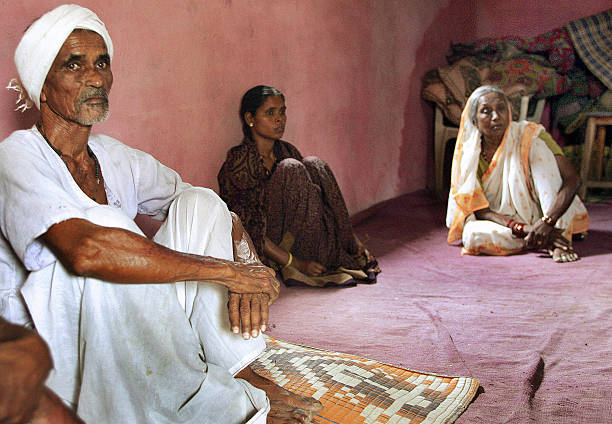
Coming to the question of who dies, male farmer suicides account for roughly 90% of all recorded farmer suicides in Maharashtra across the entire period. That proportion has barely shifted in two decades. Female farmer suicides are smaller in absolute numbers but follow exactly the same pattern. Rising toward the 2006 peak, falling after the 2008 waiver, climbing again and falling after the 2017 waiver, before climbing once again.
The male skew in mortality reflects who holds formal title to land and, therefore, who holds formal debt. Kisan credit cards, crop loans from nationalised banks, and informal moneylender loans in Vidarbha are predominantly in the male head-of-household's name. The debt, when it cannot be repaid, is legally that person's to carry. Female farmer suicides do not represent the same structural pressures, in households where the woman is formally recorded as the cultivator. Maharashtra has consistently lost two decades. But that count falls to just two decades. But that count falls to just...
Maharashtra is consistently first and Karnataka a close second (with a sharp spike in 2016 during a severe drought year). Andhra Pradesh and Telangana combined have seen numbers fall steadily since the mid-2000s. Madhya Pradesh rose sharply after 2017, partly from NCRB's counting methodology changes in loan waiver effects.
On a per-capita basis, adjusting for the number of cultivators in each state, the picture is different. Maharashtra's burden narrows. Karnataka's per-capita rate has matched or exceeded Maharashtra's in several years, including 2016. Madhya Pradesh, which looks significant in absolute terms, falls sharply once you account for its large agricultural population.
The per-capita comparison matters because it shifts the question from "which state has the most suicides" to "which state has the highest suicide risk per farmer". Both Karnataka and Maharashtra score high by that measure. The scale of the problem in Maharashtra reflects, in part, its large cotton-dependent farming in a single region.
Knowing where the crisis sits and who it falls on is the easier half of this story. The harder question is whether measures such as loan waivers can stop farmer suicides. That's a different analysis, perhaps for another day. For now, identifying the areas where the debt-stress is the worst and the people it kills should help examine intervention options that can be sustained and have a durable impact.
Writer: Professor R. S. Sengar, Dean College of Biotechnology and Director Training and Placement, Sardar Vallabhbhai Patel University of Agriculture and Technology, Modipuram, Meerut.


