

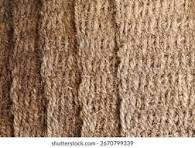
Coir packing material Publish Date : 27/08/2026

Coir packing material
Prof. R. S. Sengar
Coir is used as a packing material because it is a natural, strong, cushioning and sustainable fibre. It can be particularly useful for protecting products during transport.
Why coir is suitable for packaging
1. Good cushioning – Coir fibre and curled coir can absorb shocks and vibrations, helping protect fragile products.
2. High resilience – Coir has good spring-back properties and does not easily lose its structure under repeated compression.
3. Lightweight – It provides protective volume without adding excessive weight.
4. Moisture tolerance – Compared with many natural fibres, coir has relatively good resistance to moisture and decay.
5. Breathable – Its natural structure allows air circulation, which can be useful when packing agricultural products.
6. Biodegradable – Coir-based packaging can provide an environmentally friendlier alternative to some plastic foams.
7. Renewable raw material – It is made from coconut husk, an agricultural by-product.
8. Good insulation – Coir can provide some thermal and vibration insulation for packed products.
9. Strong and durable – Coir fibre has good tensile strength and durability, making it suitable for protective mats, pads and formed packaging.
10. Value addition to coconut waste – Using coir for packaging converts coconut husk into a higher-value product.
Potential coir packaging products
* Coir cushioning pads
* Coir fibre protective sheets
* Molded coir packaging
* Coir-based bottle protection
* Fruit and vegetable packaging
* Furniture and appliance protection
* Protective packaging for glass and ceramics
* Automotive component packaging
* Coir mats/pads for export packaging
The biggest opportunity is molded coir packaging, where coir fibre is formed into custom shapes similar to molded pulp or foam packaging. This could be marketed as a plastic-free, biodegradable protective packaging solution, provided the particular product meets the required strength, moisture, hygiene and compostability requirements.
Writer: Professor R. S. Sengar, Director Training and Placement, Sardar Vallabhbhai Patel University of Agriculture and Technology, Modipuram, Meerut.


