


Innovation for Public Good Reimagining Agricultural Transformation Publish Date : 24/04/2026

Innovation for Public Good Reimagining Agricultural Transformation
Professor R. S. Sengar
The journey from the Green Revolution's focus on calorie sufficiency to the current era of 'Nutritional and Prosperity Security' underscores a fundamental shift in India's agricultural spirit. As we march toward Viksit Bharat@2047, agriculture is no longer viewed merely as subsistence activity, but as a technology-enabled frontier driven by the Jai Anusandhan spirit.
Agriculture stands at the crossroads of urgent global challenges in the 21st century. On one hand, the world's population is projected to reach approximately 10 billion by 2050, intensifying the demand for food production. On the other hand, climate change and resource constraints are pressuring existing agricultural systems, necessitating smarter and more resilient farming methods. In this context, innovation in agriculture technology (agri-tech) has become paramount globally as a means to raise productivity, adapt to climate stresses, and ensure food security.
Advances such as precision farming, artificial intelligence (AI) driven tools, biotechnology, and digital farmer services are redefining how food isgrown and distributed, marking what many call the 'Fourth Agricultural Revolution.' These innovations are not just about increasing profits, but they are directed at achieving public good outcomes like food security, environmental sustainability, and improved livelihoods for farmers.
The Indian Agricultural Context
The agri-tech innovation has become urgent more than ever in India, where agriculture is deeply interwoven with the nation's socio-economic fabric. India is home to around 18% of the world's population but only about 2.4% of total world's land, making agricultural efficiency and innovation crucial. Theagricultural sector in India provides a livelihood to roughly 50% of the workforce yet contributes only about 18% to the country's Gross Domestic Product. This disparity highlights a productivity challenge. Smallholder farmers dominate Indian agriculture (with average landholdings shrinking to around 1 hectare), and they face myriad challenges such as limited capital, fragmented markets, post-harvest losses, and increasing climate variability.
Therefore, innovation in the Indian agricultural necessitates developing and deploying solutions that boost productivity, profitability, and sustainability for millions of farmers, thereby uplifting rural society as a whole.
From Food Security to Prosperity
The discourse on Indian agriculture has historically been dominated by the imperatives of the Green Revolution which successfully filled the nation's granaries, total foodgrain production rose from 108.42 million tonnes in 1970-71 to a record 357.73 million tonnes in 2024-25. However, it has been a linear, input-intensive model designed to ward off famine and ensure food and calorie sufficiency. Over the period, it simultaneously created significant ecological and sociological burdens in terms of soil degradation, groundwater over-extraction and pollution, chemical residues in food, and severe health hazards.
Presently, we are witnessing a paradigm shift from 'food security' to what we might call as 'prosperity security, encompassing nutritional adequacy, income resilience, and ecological sustainability. This transition is not only quantitative but profoundly qualitative. Indian agriculture is increasingly moving beyond yield-per-hectare as the sole metric of success to embracing a more holistic scorecard that includes soil health, water use efficiency, and the net income retained by the farm household. This transformation, reflected in Prime Minister's inclusion of 'Jai Anusandhan' (hail to innovation and research) alongside 'Jai Jawan, Jai Kisan, Jai Vigyan, acknowledging innovation as a decentralised, and democratic phenomenon.
It recognises that the workforce engaged in agriculture, are not merely passive recipients of technology but active knowledge producers whose experiential wisdom, when systematically validated and supported, can generate solutions uniquely suited to India's diverse agro-ecological contexts.
Redefining Innovation for Public Good in Indian Agriculture
In traditional economic theory, a 'public good' is something which is non-exclusive and non-rivalrous
in consumption. However, in the context of a fast developing yet predominantly agricultural economy like India where 86% of landholdings are smaller than two hectares, the concept of innovation acquires additional dimensions, comprising accessibility, adaptability, and accountability. Accessibility means technologies that overcome barriers of cost, complexity, and cultural appropriateness to reach the most resource-constrained stakeholders. Adaptability refers to solutions that can be modified and contextualised for diverse agro-climatic zones, farming systems, and socio-economic conditions without requiring prohibitive infrastructure investments. Accountability encompasses systems that respect farmers' autonomy and traditional knowledge.
Global Agri-Tech Innovation Landscape
Globally, agri-tech innovations are gathering momentum as essential tools to feed the ever-growing population. The global agritech market has been experiencing robust growth, roughly doubling from an estimated value of about USD 24.4 billion in 2024 to a projected USD 49 billion by 2030. This growth is driven by the rising demand for sustainable agriculture and by rapid technological advancements that are making farms smarter and efficient.Key innovation trends are evident across various countries. Precision agriculture, for instance, leverages Global Positioning System (GPS), remote sensing, and Internet of Things (IoT)- based sensors to enable farmers to apply water, fertilisers, and pesticides more judiciously, boosting yields while conserving resources.
Drones are increasingly being utilised for tasks such as planting, weeding, and aerial spraying. 'Kisan drones' in India are becoming the part of global trend in farming. Biotechnology and breeding innovations, for example, drought-tolerant or pest-resistant crop varieties are addressing the need for resilience in the face of climate change.
India's Policy Priorities
India's agricultural transformation rests on reviving nutritionally dense traditional crops, achieving self-reliance in key agriculture commodities, and resurrecting indigenous agricultural wisdom. The PM-KISAN scheme's direct income transfers and Kisan Credit Card's democratised credit provide critical financial succor. The integration of digital infrastructure e-NAM (electronic National Agriculture Market) platform is breaking down traditional market barriers between the farm gate and dispersed consumers, allowing farmers in remote areas to access price information and buyers across state boundaries.India's Sub-Mission on Nutri-Cereals positions millets as Shree Anna as they are climate-resilient, require less water and fewer inputs, and are nutrient-dense compared to many staple cereals. India achieved production of 180.15 lakh tonnes in 2024-25, emerging as the world's largest millet producer.
The mission is supported by high-yielding seeds distribution, modern machinery, and Rural Infrastructure Development Fund (RIDF) for Value Chain Parks ensuring processing remains within farming communities. The National Mission on Edible Oils (Oilseeds) seeks to expand oilseed cultivation by an additional 40 lakh hectares, while the Mission for Aatmanirbharta in Pulses (during 2025-31) targets an additional 35 lakh hectares of pulses area in order to reduce the continuing import gap. In 2023-24 India imported 47.38 lakh tonnes of Pulses even as production rose from 192.6 lakh tonnes (2013-14)to 252.38 lakh tonnes (2024-25).
The National Mission on Natural Farming is resurrecting civilisational memory of sustainable agriculture through desi cow-based livestock integration, diversified cropping, on-farm biomass mulching, cow dung-urine formulations like Jeevamrit and Beejamrit, and botanical pest management.
In the Union Budget 2026-27, the 3 Kartavyaframework explicitly links agriculture to productivity enhancement and entrepreneurship, with emphasis on small and marginal farmers. The Budget proposes Bharat-VISTAAR (Virtually Integrated System to Access Agricultural Resources) as a multilingual Al tool that will integrate Agri Stack portals and Indian Council of Agricultural Research's (ICAR) package of agricultural practices to provide customised advisories to improve farm decisions, productivity, and risk management. It also advances a value-chain approach through measures such as integrated development of 500 reservoirs and AmritSarovars for fisheries and support for high-value crops such as coconut, sandalwood, cocoa, cashew, and building them into premium global brands by 2030.
Agri-Tech Innovations: Bridging Tradition and Technology
In global agri-tech advancement, Indian rural and grassroots innovators are also participating by developing various kinds of important agricultural technologies for diverse purposes. These innovations, nurtured by the National Innovation Foundation - India (NIF), represent affordable, contextually appropriate solutions emerging from the farms themselves rather than from formal research institutions. These innovations significantly reduce drudgery, particularlyfor women farmers, while improving operational efficiency and reducing costs.
The challenge of paddy transplantation exemplifies this innovation imperative. Ergonomic studies show that transplanting is typically performed by women in prolonged bending postures while working in standing water, which contributes to severe physical drudgery and associated health risks. In response, grassroots innovators have developed low-cost alternatives, RanjitMirig from Sambalpur, Odisha, designed a manual transplanter that requires two operators and achieves approx. 0.3 acre/hour, and NIF-facilitated trials reported it takes less than one-seventh of the time required for manual transplanting.
Similarly, SadasiboMajhi (Koraput, Odisha) developed a device for resource-constrained tribal contexts that transplants six rows simultaneously with a field capacity of approx. 0.6 acre/hour.Similarly, DharambirKamboj's Multipurpose Food Processing Machine represents the convergence of post-harvest technology with rural entrepreneurship. Dharambir's Multipurpose Food Processing Machine is a portable, vertical free-standing cylindrical unit, capable of processing over 100 different types of fruits, herbs, and seeds.
It can process 200 liters of aloe vera in an hour while functioning as a large pressure cooker with temperature control and auto cut-off facility. Critically, it incorporates a condensation mechanism enabling extraction of essences and oils from flowers, seeds, and medicinal plants, performing pulverising, mixing, steaming, pressure-cooking, and juice, oll, and gel extracting in a single machine. This innovation has been adopted by women's self-help groups across multiple states, creating distributed livelihood opportunities. The machine is now sold across 15 countries. These innovations are only a few among streams of thousands of local innovations demonstrating contextually appropriate, affordable technological solutions developed by farm practitioners in India.
Self-Reliance through Grassroots Agricultural Innovations
The discussion above on agri-tech machinery innovations seamlessly connects to the broader framework of self-reliance in agriculture, which is often seen in terms of schemes and subsidies. However, a closer look at the grassroots reveals multiple dimensions of innovation. Beyond machinery equipments, farmers are breeding, selecting, and perfecting plant varieties that solve constraints of yield, quality, storability, and seasonality. NIF becomes an enabling bridge to such innovative farm practices by documenting such innovations, ensures rigorous evaluation, trials, helping secure protection under the Protection of Plant Varieties and Farmers' Rights Authority (PPV & FRA) framework, and facilitates market access so the farmer-innovators retain identity as well as value of their knowledge.
Scores of individuals and grassroots communities are part of a broad-based rural innovation bedrock where capabilities emerge from knowledge holders. The true power of grassroots innovation becomes evident through concrete examples that demonstrate how individual farmers, through systematic refinement and institutional support, transform localised knowledge into solutions with far-reaching impact.
Hariman Sharma of Bilaspur, Himachal Pradesh demonstrates self-reliance through farm-level experimentation and transforming it into a nationally scalable horticulture asset. Through systematic germination studies, refinement, and grafting, he developed HRMN-99, an apple variety that fundamentally challenges conventional cultivation requirements. Unlike traditional apples grown at elevations of 5,000-8,500 feet requiring 1,000-1,500 chilling hours, HRMN-99 thrives in plains, tropical, and sub-tropical regions where summer temperatures reach 40-45°C, eliminating the chilling-hour dependency for flowering and fruiting.
NIF-supported multi-location farm trials, with 7,572 saplings transplanted over two years for adoption and fruiting studies across seven states comprising Delhi, Uttar Pradesh, Uttarakhand, Karnataka, Haryana, Himachal Pradesh, and Manipur. Notably, fruiting was reported even in one-year-old plants, demonstrating the variety's rapid productivity and adaptability. HRMN-99 has been accorded formal protection under the PPV&FRA, and Sharma got honored with the 'Padma Shri' in 2025 for his contribution to agriculture.Similarly, Riyawan Silver, an improved garlic variety developed by IshvarlalDhakad in Riyawan, Madhya Pradesh, through disciplined selection method from local garlic variety.
It exhibits strong physical traits linked to better market acceptance which is large compact white bulbs, containing up to approximately20 cloves per bulb, higher yield potential (up to 120 qunital/ha), and storability up to 10 months. Importantly, 100 quintals of planting material have been disseminated across Haryana, Rajasthan, Uttar Pradesh, Maharashtra, Madhya Pradesh, and Gujarat.
Likewise, ShrikishanSuman, a farmer from Kota, Rajasthan, exemplifies indigenous resilience through developing a regular, round-the-year, dwarf mango variety called Sadabahar. He spent nearly 15 years in preserving and refining mango grafts to stabilise the variety. Sadabahar is also resistant to major diseases and common mango disorders, with deep orange flesh and sweetness comparable to Langra. Being dwarf, it is suitable for kitchen gardening as well as high-density plantations, widening access and decentralising production. NIF facilitated on-site evaluation and field testing of the variety in collaboration with ICAR - Indian Institute of Horticultural Research (IIHR), Bangalore, and SKN Agriculture University, Jaipur, Rajasthan.Thus, progression from indigenous refinement, institutional validation, rights protection, to entrepreneurship, illustrates the farmer's transformation from isolated producer to value chain participant.
The Path Forward
The journey from the Green Revolution's focus on calorie sufficiency to the current era of 'Nutritional and Prosperity Security' underscores a fundamental shift in India's agricultural spirit. As we march toward Viksit Bharat@2047, agriculture is no longer viewed merely as subsistence activity, but as a technology-enabled frontier driven by the Jai Anusandhan spirit. By bridging the gap between indigenous knowledge system preserved by communities and cutting-edge digital infrastructure, India is crafting a unique model of decentralised innovation.
To sustain this momentum, we must now pivot toward precision so that we can truly integrate the Agri Stack data of 11 crore farmers with localised climate-smart practices to increase employment opportunities, adopt better production methods, and reduce the 20-30% post-harvest losses currently happening in supply chain. The transformation of agriculture from passive production activity to autonomous entrepreneurship will pave the path for Kartavya se Kirtiman (Duty to Glory), anchored in self-reliant and sustainable growth.
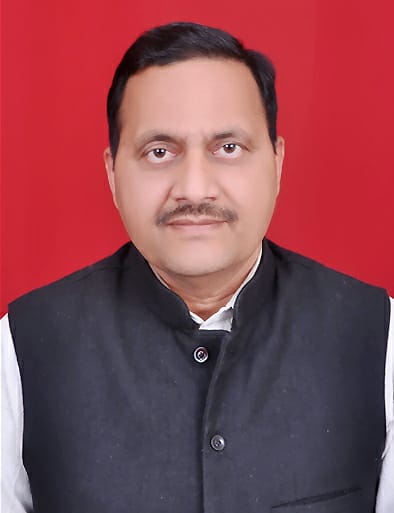
Writer: Professor R. S. Sengar, Director Training and Placement, Sardar Vallabhbhai Patel University of Agriculture and Technology, Modipuram, Meerut.


