

Boron: An Important Nutrient for Mango Crop Publish Date : 14/03/2026

Boron: An Important Nutrient for Mango Crop
Dr. R. S. Sengar and Dr. Shalini Gupta
Boron is an important micronutrient, generally required in soil at a concentration of 0.5 to 2.0 mg/kg. Although this requirement is much lower than that of macronutrients such as nitrogen, boron plays a very important role in plant physiology. It is involved in many key processes. Boron helps in the formation of the plant cell wall, which is essential for all types of growth. If cell wall formation is disturbed, normal plant development stops. This adversely affects many internal plant processes.
New shoots and roots remain underdeveloped, leaf tips turn yellow or brown, sugar transport is disrupted, and growing parts of the plant suffer from energy deficiency. The pollen tube does not develop properly, resulting in incomplete pollination and poor fruit or seed formation. All these factors ultimately reduce yield and deteriorate crop quality.
In India, mango is known as the king of fruits and is an important part of the agricultural economy. To obtain a good mango crop, water, fertilizers, and pesticides alone are not sufficient; micronutrients are also essential. One of the most important micronutrients is boron (B). It is extremely important for mango quality, productivity, and plant health.
Role of Boron in Mango Cultivation
- Helps in flower and fruit formation: Boron supports proper flower development and pollination. This improves fruit set and reduces fruit drop.
- Improves fruit quality: Adequate boron improves fruit size, makes the pulp thicker and sweeter, and increases shelf life.
- Strengthens the cell wall: Boron provides strength to plant cells, keeping the plant healthy and improving resistance to diseases.
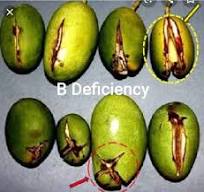
- Prevents fruit cracking: Boron deficiency can cause fruit cracking or deformation in mango. Proper boron supply helps reduce this problem.
Symptoms of Boron Deficiency
- New leaves become small and deformed.
- Fruits remain small or develop abnormal shapes.
- Rate of fruit drop increases.
- Fewer flowers appear or pollination does not occur properly.
How to Apply Boron?
- As foliar spray: Mosaic Magna Boron can be sprayed at the rate of 1 ml per liter of water.
- In soil application: Boron-containing fertilizers such as borax can be mixed into the soil at the rate of 1 to 2 kg per acre.
- With other fertilizers: Boron should be applied in balanced amounts along with NPK or other fertilizers for maximum benefit.
Points to Remember
- Excess boron can be harmful, so apply it only in the recommended quantity after soil testing.
- Applying boron 1 to 2 times a year is sufficient.
Conclusion
If you want to obtain higher yield and better quality from your mango crop, do not ignore micronutrients like boron. This small nutrient can make a big difference to crop health and farmer income.

Writer: Professor R. S. Sengar, Director Training and Placement, Sardar Vallabhbhai Patel University of Agriculture and Technology, Modipuram, Meerut.


