

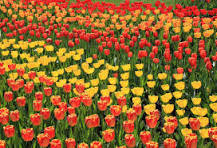
Huge employment opportunities in Horticulture Publish Date : 09/02/2026

Huge employment opportunities in Horticulture
Professor R. S. Sengar
Horticulture is both a science and an art. Activities such as pruning, growing, and transplanting plants require specialized knowledge and experience. Ancient texts like "Upvan Vinod" reveal that the art of gardening had already developed in ancient times. People knew how to graft and protect dead plants from insects. Horticulture flourished during the Mughal period. The development of horticulture as a science in India can be traced back to 1928, when the Imperial Council of Agricultural Research was established. Through this, research centers were established in every state, and research was initiated. In the Eighth Plan, the Indian government gave high priority to horticulture.

As a result, India is now among the world's leading producers of fruits, vegetables, and flowers. Today, landscaping is rapidly expanding in metropolitan cities. This involves beautifying the land. Gardening is an important component of this practice. Opening nurseries and consulting centers for plants, vegetables, and gardening has become a source of income. Land scarcity and growing fashion have led to the rise of rooftop farming and kitchen gardening. Those interested in gardening must be nature lovers and possess the capacity for physical labor. Whether the weather is freezing cold or scorching hot, they must always be prepared to work in the garden. For growth in this profession, proper irrigation is also essential.
Branches of Horticulture Nursery and Garden Management: This includes garden development; attractive landscape design and methods of sowing and planting are explained.
Fruit and Vegetable Technology: Under this, information is given about the techniques of processing and preservation.
Floriculture: - Under this, flowering and ornamental plants are studied.
Olericulture: - Under this, the production of vegetables is studied.
Pomology: - Under this, information is given about the methods of uprooting and growing flowering trees and plants.
Education: - Currently, 33 agricultural universities, five affiliated institutions (four of which are Indian Council of Agricultural Research institutes), and three central universities offer horticulture education. Degrees in horticulture, master's, and PhD are available here.
B.Sc. in Horticulture (Bachelor of Science)
This is a four-year program offered at approximately 26 agricultural universities. It typically covers general horticulture, fruit science, botany, floriculture, and post-harvest technology. Students who have passed the 10-2 examination with science subjects can enroll in this program.
How and when to enter?
Of the total available seats, 15 percent are filled through an All India Entrance Examination conducted by the Indian Council of Agricultural Research. This examination is held in May/June each year. The remaining 85 percent are filled through examinations conducted by agricultural universities.
How to Apply: Candidates seeking admission under the Central Quota (ICAR/BCI) may apply to the relevant institution as per the prescribed procedure. Candidates seeking admission to a university may obtain detailed information from the Registrar of the respective university.
Scholarships: The Council awards a monthly merit scholarship of ₹800 based on ranking in the All India Entrance Examination for any university outside the state. Fifteen scholarships are available for B.Sc. programs. Junior Research Fellowships are awarded to 29 M.Sc. students based on the Council's All India Combined Examination. This includes a monthly stipend of ₹3000 or an additional ₹6000 annually for incidental work. The Council also awards research fellowships to PhD students from universities and equivalent institutions. These fellowships are awarded based on the results of the Agricultural Scientists Selection Board.
Employment opportunities:
Many states have independent horticulture departments. In the government sector, positions such as botanist, horticulturist, floriculture specialist, landscaping officer, nursery and garden in-charge, garden manager, district agricultural officer, and lecturer are available. These positions are equally in demand in the private sector. Agricultural clinics can also be opened to provide consultation on horticulture, design, supervision, and greenhouses. Institutes can also be established to provide education in seed production and processing of horticultural products.
Premier training institute
1. Sardar Vallabhbhai Patel University of Agriculture and Technology, Modipuram, Meerut (Uttar Pradesh)
2. Narendra Dev University of Agriculture and Technology, Faizabad (U.P.)
3. Chandra Shekhar Azad University of Agriculture and Technology, Kanpur (Uttar Pradesh)
4. Banda University of Agriculture and Technology, (Uttar Pradesh)
5. Rajmata Vijayaraje Scindia Agricultural University, Gwalior (Madhya Pradesh)
6. Dr. Yashwant Singh Parmar University of Horticulture and Forestry, Solan (H.P.)
7. Indian Institute of Horticulture, Bangalore.
8. Mahatma Phule Agricultural University Rahuri, Maharashtra.
9. Virsa Agricultural University, Ranchi, Jharkhand.
10. Acharya N.G. Ranga Agricultural University, Hyderabad.
Gardener Training Institute
1. Punjab Rao Deshmukh Agricultural University, Akola, Maharashtra.
2. Ramakrishna Mission, Divyayana Kendra Ranchi, Jharkhand)
3. Rajendra Agricultural University Samastipur, Bihar Agricultural Horticulture Society, Public Garden Hyderabad.
4. Punjab Agricultural University, Ludhiana.
Major Agricultural University
1. Assam Agricultural University, Jorhat (Assam).
2. Chaudhary Charan Singh Agricultural University, Hisar (Haryana).
3. Indira Gandhi Agricultural University Raipur (Chhattisgarh).
4. Rajasthan Agricultural University, Bikaner (Rajasthan).
5. Chaudhary Charan Singh University, Agra (Uttar Pradesh).
6. Jawaharlal Nehru Agricultural University, Jabalpur (Madhya Pradesh).
7. GovindBalabh Pant University of Agriculture and Technology Pant Nagar, Udham Singh nagar (Uttaranchal).
8. Punjab Agricultural University Ludhiana (Punjab).
9. Tamil Nadu Agricultural University, Coimbatore (Tamil Nadu).
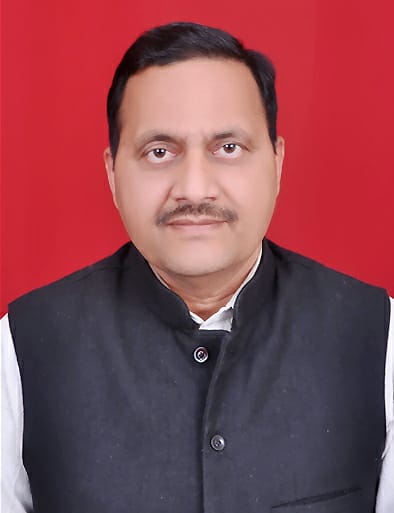
Writer: Professor R. S. Sengar, Director Training and Placement, Sardar Vallabhbhai Patel University of Agriculture and Technology, Modipuram, Meerut.


