


Multidisciplinary Approach to Careers Publish Date : 27/01/2026

Multidisciplinary Approach to Careers
Professor R. S. Sengar
"National Education Policy 2020 will act as an instrument of change that will lay a strong foundation on which the future of 'Naya Bharat' will be built. It will mark a shift from the 'burden of school bag' to 'experiential learning' with focus on making 'job creators' instead of 'job seekers' in line with the aspirations of Indian youth in the 21st century."
Tanushka is pursuing the undergraduate degree in economics (honours) at a college under Delhi University. In addition to her core subjects of economics, she has chosen 'Politics of Globalization' as her general elective, Digital Empowerment as a value-added course, Creative Writing as a skill enhancement course, and Sanskrit as her ability enhancement course. Beyond academics, she actively participates in the college dance society to pursue her passion and develop her soft skills. She has designed a diverse and enriching academic journey. This flexible and multidisciplinary study plan has been made possible by the National Education Policy (NEP) 2020. Such an approach supports students in realizing their full human potential and prepares them to explore diverse and fulfilling career paths in the future.
The National Education Policy (NEP) 2020 is a visionary document that focuses on development of cognitive learning which shall promote innovative and critical thinking among students. NEP envisions an education system which is based on inquiry, discovery, discussion and analysis; ultimately promoting the zeal to learn among students right from the pre-primary to higher education level. This policy plans to bring structural changes in the education system to transform the teaching from 'what to think' to 'how to think, emphasizing on the flexibility, multidisciplinary and a holistic approach to learning.
Education is fundamental for achieving full human potential, developing an equitable and just society, promoting national development and catering for the needs of 21st century, the multidisciplinary approach of education at all levels of schooling gains paramount significance. The NEP 2020 policy very well emphasizes the need to move towards multidisciplinary approach of teaching and learning in education.
Holistic Learning
The multidisciplinary approach in education encourages the integration of subjects and the adoption of a more holistic and well-rounded curriculum. It is an academic approach that assimilates content and teaching methods from multiple disciplines or fields of study. In a multidisciplinary education programme, students are exposed to knowledge, perspectives and methodologies from various subject areas rather than focusing on a single discipline or a limited area of study that restricts wider understanding. This includes integration of disciplines, interconnected learning and collaborative knowledge. The multidisciplinary approach in education can do away with rigid and traditional stream-based structure and assist the students to follow the passion with guidance to excel as per their future goals. It promotes the culture of skilling, re-skilling and up-skilling among the students, a pivotal necessity in the new era of knowledge economy.
NEP 2020 reflects the true essence of Swami Vivekananda's 'Man-making Education', Aurobindo's 'Integral Education' and Mahatma Gandhi's 'Basic Education'. It recognizes soft skills such as communication, adaptability, integrity, cooperation, teamwork, leadership, accountability, compassion, empathy, resilience, etc. as 'life skills' while mastery and proficiency in the field of knowledge as 'hard skills'. The combination of the two creates a proficient balance between knowledge and interpersonal attributes. As such, this approach is conceived to facilitate students to develop academic expertise with vital leadership skills that can help them in their career path. One can trace the roots of such an education system in ancient India. Our ancient education system evolved over the period and laid emphasis on the holistic development of the individual. Gurukul education system was considered a source of knowledge, traditions and practices that guided and encouraged expertise and elements of humanity. Students in Gurukuls were trained in fine arts, medicine, mathematics, astronomy, law, politics and the art of warfare along with other vocational and professional skills. Emphasis was also laid on values such as humility, truthfulness, discipline, self-reliance and all other aspects of life. Multidisciplinary learning was not just an educational philosophy but a substantial way of understanding the world.
Hence, multidisciplinary education shall help Indian educational institutions to shape critical thinkers who can think out of the box to solve new age issues by utilizing the breadth and depth of learning from their education. Its focuses on value-based education and Global Citizenship Education (GCED) to make the students globally aware, increase the employability and create independent-thinking ethical citizens. This approach leads to better learning outcomes, innovation and a deeper understanding of various subjects. Focus on experiential learning and integration of arts and sports aim to make learning engaging, relevant, and stimulating for students. By actively participating in projects, experiments, and discussions, students develop critical thinking skills, learn to collaborate effectively and perceive better the connections between different disciplines. This fosters a love of learning that extends beyond textbooks and prepares students for success in their career in a dynamic and interconnected world.
Career and Employability
Obtaining the stability of job and conformity to a profession has been the hallmark of traditional career trajectory in India. The changing world scenario and emerging needs of the 21st century demand for different skill sets and priorities than ever before. Skills and proficiency in jobs are changing, so the approach to jobs should also change accordingly. Career mapping, career choices and career counselling have been recognised as major headway to link the learners with job market and practical aspects of life. If the multidisciplinary approach of education can be well linked with career mapping and choices, it can turn India into a thriving knowledge society and a global superpower in human capital.
One of the fundamental components of the NEP is its focus on skill development. The policy recognises that for students to succeed in their professions in today's rapidly evolving labour market, they must possess a variety of abilities. It also recognises the importance of integrating vocational education into mainstream education, thereby providing students with opportunities to acquire skills from various disciplines and enhancing their employability in diverse fields. Introduction of vocational course from class 6th can provide students with useful skills that are applicable in the workforce.
NEP 2020 aims to provide flexibility to the learners to choose their learning trajectory and path in life according to their talents and interests. Age old hard separations between arts and sciences, curricular and extra-curricular activities, vocational and academic streams should be put to an end in order to eliminate harmful hierarchies and silos between different areas of learning. Multidisciplinary and a holistic education across the sciences, social sciences, arts, humanities, and physical education and sports for a multidisciplinary world will assist learners to thrive on the unity and integrity of knowledge.
Integrated Curriculum
The NEP 2020 aims to introduce new-age courses with flexible combinations and durations in IITs, IIMS, NITs, and universities. These courses emphasise multidisciplinary learning, vocational skills and research-oriented programmes. Universities have also started offering on-demand courses aligned with the NEP 2020. A student of literature taking computer and artificial intelligence (AI) has been unheard of in the traditional Indian education landscape. A course on 'Hindi literature' combined with computer skills and digital literacy shall be helpful for students in many ways, particularly in translation-related areas.
Professional courses like Chartered Accountancy (CA) combined with Law (LL.B & LL.M) can assist a learner to perform both the task simultaneously. A company or firm would definitely prefer such candidate for employment as it will enhance the efficiency of the organisation along with reduced expenditure on Human recourse. The Supreme Court recently considered a PIL (Public Interest Litigation) proposing a shift from thecurrent 5-year integrated LL.B to a 4-year law degree in line with the NEP 2020. In the coming times, professional course students would need a greater focus on practical skills, critical thinking and ethical awareness, aligning them with evolving industry needs and global standards. Integrated courses such as Masters in Energy Science and Engineering with knowledge of robotics, automation, digital marketing and e-commerce will provide greater career options. Multidisciplinary approach will also boost the start-up culture in the country.
Minor programmes have been introduced in graduation and post graduation courses to equip students with interdisciplinary expertise in emerging domains, preparing them to meet the dynamic demands of the global job market while complementing their core academic disciplines. A student of graduation honours course can opt for various elective course ranging from political science, environmental studies, social & emotional learning, science in society, ayurveda& nutrition, vedic mathematics, ecology & literature, ethics & culture, digital empowerment, sustainable eco-tourism, yoga, business communication, chocolate craft, financial planning, political leadership, Indian languages, organic forming, document preparation, python language, Indian manuscriptology to public speaking.
NEP 2020 has stressed the importance of practical skills alongside theoretical knowledge. These professional courses have started engagement in more hands-on training, internships and real-world case studies. This could mean that professional course students will have opportunities to explore related subjects outside of traditional boundaries, potentially broadening their knowledge base and career options. NEP 2020 is shaping the professional course to be more relevant, practical, and globally competitive, preparing students for a wider range of career opportunities while upholding the highest standards of ethical conduct.
Internationalisation and Collaboration
The NEP emphasises the importance of internationalisation and collaboration in education. The policy promotes collaborations between Indian and foreign academic institutions to expose students to other cultures and better prepare them for a globally connected future. The policy also intends to makeIndia a hub for higher education, attracting foreign students and giving Indian students the opportunity to study at foreign schools. This will enhance students' professional development and introduce fresh perspectives, information, and innovation into the educational system.
Multiple Entry and Exit Options
NEP 2020 allows for multiple entry and exit options enabling a more flexible learning path and alignment with international standards. Indian academics ecosystem is gearing up to introduce such facilities in their courses. Credit-based learning will enable learners to take up any course based on their choices and demand of the industry. Mixing academics with hands on job experience will perfectly blend the career choices and competency of the learners with the requirements of the job market.
Multidisciplinary Courses
As envisioned by NEP 2020, universities and technical institutions have started offering a wide range of multidisciplinary courses across various fields-encompassing both traditional disciplines and emerging areas such as artificial intelligence, machine learning, design thinking, data science, cyber-security, environmental studies, legal studies, and sustainability.
Some of the newly introduced domains are as follows:
Environmental Studies and Sustainability: Courses in environmental science, environmental management, climate change and sustainable development are being integrated with law, data management, ecology, policy and social sciences. Courses on waste management, disaster management, smart buildings, social entrepreneurship can provide various career choices to the youth
Arts and Humanities: Programmes in SocialSciences, art, literature are intertwined with knowledge of technology, environment, creative writing, media, International relation, soft skills and law to make them employable.
Knowledge of Technology: Fields like Al, machine learning, data science, cyber-security, and robotics are offered as specialised multidisciplinary with public administration, programmes economics, social science and all traditional engineering courses.
Health, Medical, Psychology and Allied Sciences: Courses in health psychology, community health can be integrated with social work, environmental, biotechnology, occupational health, herbal nutrition, knowledge of AYUSH (Ayurveda, Yoga & Naturopathy, Unani, Siddha, and Homeopathy) and technology.
Economics and Business: Multidisciplinary approaches can be seen in subjects like entrepreneurship, e-commerce, and financial literacy, often combining economics, business administration, public policy, ecology and technology.
Computer Science and Entrepreneurial Leadership: It combines knowledge of computer with skills important to the creation and leadership of start-ups and entrepreneurship.
Holistic Development: NEP 2020 emphasises the holistic development of the student including their physical, emotional, cognitive and social well-being. It aims to develop a well-rounded person who can handle various situations and problems with confidence and competence. With the integration of several academic areas and the promotion of critical thinking, creativity, and problem-solving abilities, the NEP support a holistic approach to education and fosters experiential learning, where students can put their knowledge and abilities into practice in real-world settings.
Digital Learning: NEP 2020 emphasises the digital education in all spheres of life and working. Use of technology in education will equip students with the necessary digital skills and prepare them better for the digital age.
NEP 2020 prioritises a holistic and multidisciplinary approach, aims to foster unique capabilities and identify the learning trajectory along with cultivation of critical thinking, problem-solving, adaptability and a lifelong love of learning. Through a strong foundation in core foundational skills, a flexible and diverse curriculum and innovative pedagogical approaches, NEP 2020 has the potential to nurture well-rounded individuals who can contribute meaningfully to society. While there are challenges in its implementation, the multidisciplinary approach has immense potential benefits to career options.
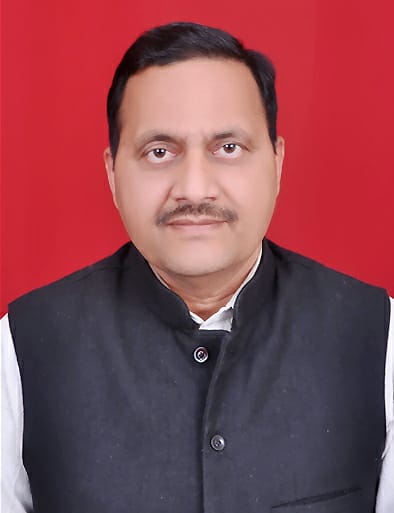
Writer: Professor R. S. Sengar, Director Training and Placement, Sardar Vallabhbhai Patel University of Agriculture and Technology, Modipuram, Meerut.


